All-in-one Processing: Water Guided Laser Cutting, Drilling, Sloting, and Carving.
Providing the most valuable solutions for advanced manufacturing
No Need Focus Adjustment
Long working distance -> No need for focus adjustment during processing
Zero Grinding of Cross-section
No heat-affected zone / No burrs / High-quality cut surface
Micron-level Precision Cutting
Fine cutting ratio up to 400:1 for kerfs greater than 0.04mm
Deep Holes Forming
Micro-hole machining depth-to-diameter ratio up to 20:1 for diameters greater than 0.3mm
Multi-dimensional Processing
Tilting and drilling capabilities / Multi-dimensional arbitrary cutting
Simple Operator
Tool-free, low material consumption / Easy to learn and use
Instant appointment With Doctors
-
Self-developed Core Software
Self-developed CNC system, mastering the "brain" of the equipment from the ground up.
-
Self-developed Core Hardware
Adhering to forward engineering and controlling independent intellectual property rights.
-
Benchmarking Against International Standards
Benchmarking against leading international technologies to further optimize specific indicators.
-
Flexible Expansion Capabilities
Based on underlying technology, expanding to five-axis and peripheral automation.
Qualität
International Research Progress of Water-Guided Laser Technology
As one of the most outstanding technological innovations of the 20th century, laser technology has undoubtedly had a profound impact on the modernization process. What deserves our attention in particular is the extremely special water-guided laser technology. This technological breakthrough has brought great help to the expansion of materials processing, inspection and measurement, national defense and military and life science fields. Today, let me lead you to understand the current research status of water-guided laser technology overseas.
Looking back at history, water-conducting lasers have emerged as early as the Renaissance of the last century. It was not until 1886 that it really attracted academic attention. Professor Colladon described the application scenario of water-conducting lasers in detail for the first time in his research report. However, the actual application of water-conducting lasers still remained in the theoretical exploration stage.
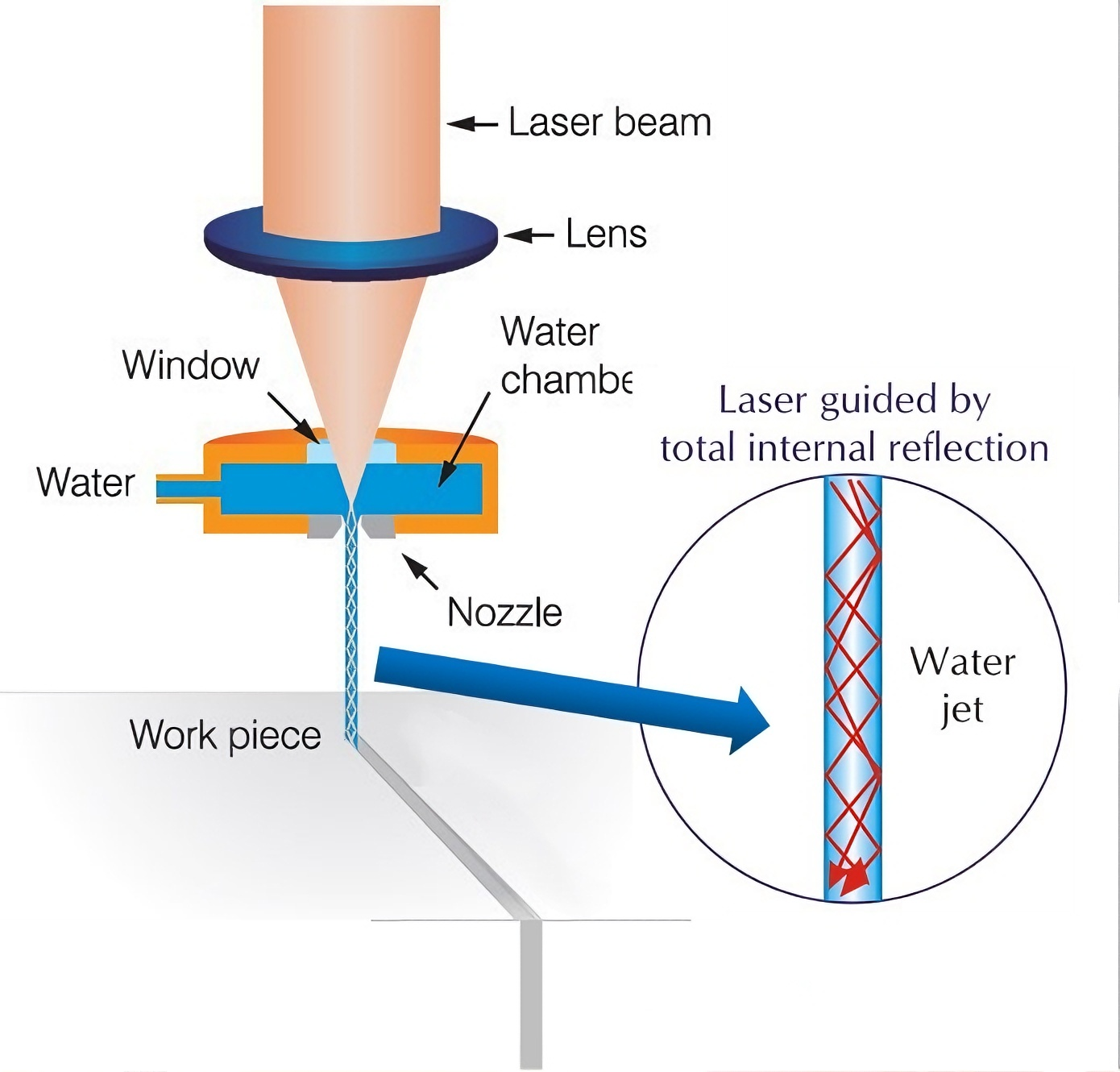
It was not until 1993 that a Swiss scientific research team successfully applied it to the processing of specific materials. They cleverly used high-pressure flowing water to guide the focused laser beam, so that the laser can achieve total reflection in the water, thus confining its energy inside the water beam, thereby achieving precise manipulation of the surface of the object to be processed. In this process, the water beam not only assumes the task of guiding the laser, but also plays the role of coolant.
In 2002, Tomokazu et al. conducted in-depth research on femtosecond laser micro-nano three-dimensional processing technology and successfully produced three-dimensional microstructures with a spatial resolution of up to 100 nanometers. Although the results of this research are excellent, the requirements on the materials to be processed are extremely high, resulting in a scarcity of available materials.
In order to solve this problem, the SYNOVA company in Lausanne, Switzerland, came into being. This company is committed to developing water-guided laser-related equipment and has successfully applied it to the processing of a variety of precision materials. It is worth mentioning that Dr. Bernold successfully obtained a U.S. patent for water-guided laser processing equipment in 1997, which marked the foundation for the development of water-guided laser processing.
Since then, researchers from various countries have realized the broad uses and prospects of water-guided lasers, and have invested in deeper research. Among them, the stability of water jets, micromachining of water-guided lasers, and the interaction between lasers and water flow have become the focus of research.
In 2004, Dr. Akos Spiegel conducted in-depth research on the phenomenon of nonlinear stimulated Raman scattering after laser light is coupled into a water beam. He found that when the distance between the laser source and the processed material increases, the nonlinear stimulated Raman scattering effect produced by the higher-power laser becomes weaker, and the corresponding changes in the water beam fiber become more significant. This research result provides an important basis for selecting appropriate working distance and laser power in the future, and also lays a solid foundation for in-depth discussion of the relationship between laser and water jet.
In the same year, Dr. Philippe Conuty also conducted research on the relationship between lasers and water jets. He revealed the rules of laser transmission in fine water jets and clearly pointed out that the transmission characteristics of laser in water beams and the transmission characteristics in optical fibers have many commonalities, both involving the uniform and symmetrical distribution of laser energy. In addition, he also emphasized the close connection between laser energy distribution and aperture size, which provided an important reference for nozzle aperture setting.
Overseas research on water-guided lasers started early and developed rapidly. The research content mainly focuses on improving the parameters and performance of the water-guided laser itself, aiming to further improve the technical level of the water-guided laser so that it can be applied in a wider range of high-end technology fields.
With the continuous advancement of science and technology, I believe that water-guided laser will show its unique charm in more fields. Let us look forward to it continuing to contribute to the prosperity and development of human society in the days to come!
Application Areas & Industry Applications Ultra-precise, Non-destructive, and Widely Compatible
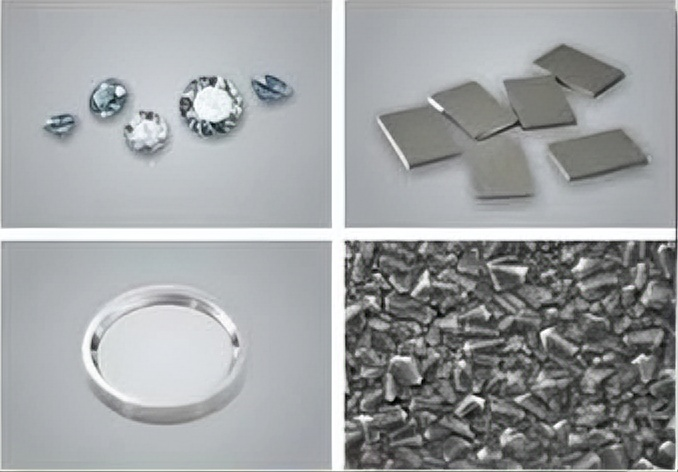
Water-guided lasers have overcome the challenges of cutting difficult-to-machine materials such as ceramics, diamonds, and composite materials!
No heat-affected zone + no tool wear, unlocking new application scenarios for specialty materials and helping you develop new high-value-added businesses!
Vorteile of Water-Guided Laser Composite Cutting
You can also reduce the extra loading time in your WordPress websites. Leverage the best addons pack for the Elementor page builder.
- Cold Processing
- No Taper
- Smooth Cut Surface

Technological Advantages: Traditional Laser VS Microjet Laser
Water microjet laser technology is by no means a mere "upgrade" of traditional lasers, but rather a "revolutionary technology" for ultra-precision machining. It fundamentally solves the problems of thermal damage and processing limitations associated with traditional lasers, helping you upgrade from simply "being able to process" to "being able to process well and process high-end materials," giving you a significant competitive advantage in the industry!
Conventional Laser Processing
Comparison Chart 1
Comparison Chart 2
Microjet Laser Processing
Precise focus adjustment required

No focusing required, enabling 3D cutting on non-planar surfaces to depths of several centimeters.
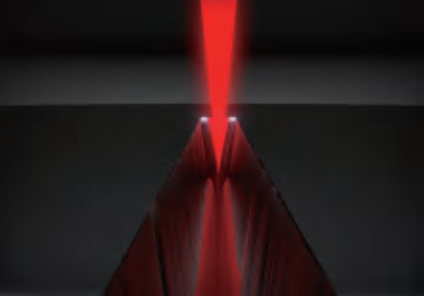
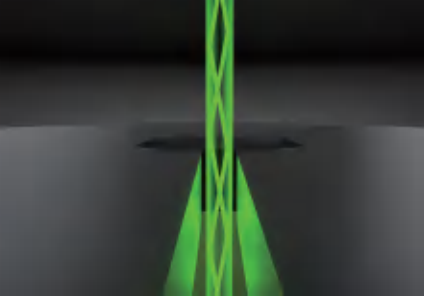
Conical laser beams leave non-parallel cut walls.

Cylindrical laser beam with parallel edges
Limitations on cutting aspect ratio

High aspect ratio, very small kerf width (>20 µm), minimal material loss, capable of deep cutting
Larger remelted layer and heat-affected zone

Water cooling process prevents thermal damage and material changes, maintaining high fracture strength
Processing debris particle deposition

Thin water film eliminates particle deposition and contamination, no surface protection layer required
Low material removal efficiency, prone to burrs

High kinetic energy of the water jet expels molten material, preventing burr formation
Limited to conductive materials

Wide range of application fields
Slow ablation process, long preparation time
Fast processing speed
High electrical discharge wire consumption
Low operating costs (no tool wear, low water consumption, and low scrap rate)
Comparison of Typical Cutting and Drilling Processing Techniques and Characteristics
In contrast, water microjet laser processing technology combines the advantages of both water and laser, overcoming many shortcomings of traditional processing methods.
Characteristic
Plasma Arc
Oxy Fuel Cutting
Water Jet Cutting
Dry Laser
Electrical Discharge Machining
Laser Waterjet
Energy Type
Thermal
Thermal
Mechanical
Thermal
Electrothermal
Thermal
Machining Accuracy
±0.3...3
±0.5...2
±0.02...1
±0.02...1
±0.001...0.1
±0.001...0.01
Minimum Inner Redius
0.5...3
0.6...3
0.2...0.7
0.1...0.2
0.013...0.2
0.015...0.05
Minimum Hole Diameter
5.0
10.0
0.5
0.5
0.2
0.2
Cutting Width
1...6
1.2...6
0.3...1.5
0.2...0.4
0.025...0.4
0.03...0.1
Processing Thickness
1...200
3...600
0.01...300
0.05...30
0.01...400
0.005...25
Multilayer Cutting
No Possible
No Possible
Possible
No Possible
Possible
Possible
Roughness Ra(μm)
1.6...200
3...600
0.01...300
0.05...30
0.01...400
0.005...25
Taper
0.1..3
0.1...2
0.02..0.5
0.02..0.5
0.001
0.001...0.01
Heat Affected Zone
0.25...8
0.5...10
0
0.1...2
0.02
0.002...0.01
Burr
0.2...2
0.3...4
0...1
0...1
0
0
Appearance
Melted/Oxidized
Oxidized/Black
Sandblasted/Matt
Oxidized/Metallic Blank
Matt/Shiny
Shiny
Aluminum Thickness
50
-
150
20
400
>30
Carbon Steel Thickness
200
600
100
30
400
>30
CrNi Alloy Thickness
200
-
100
30
400
>30
Nonferrous Thickness
10
-
100
30
400
>30
Synthetics Thickness
-
-
150
25
-
>30
Stone Thickness
-
-
150
-
-
>30
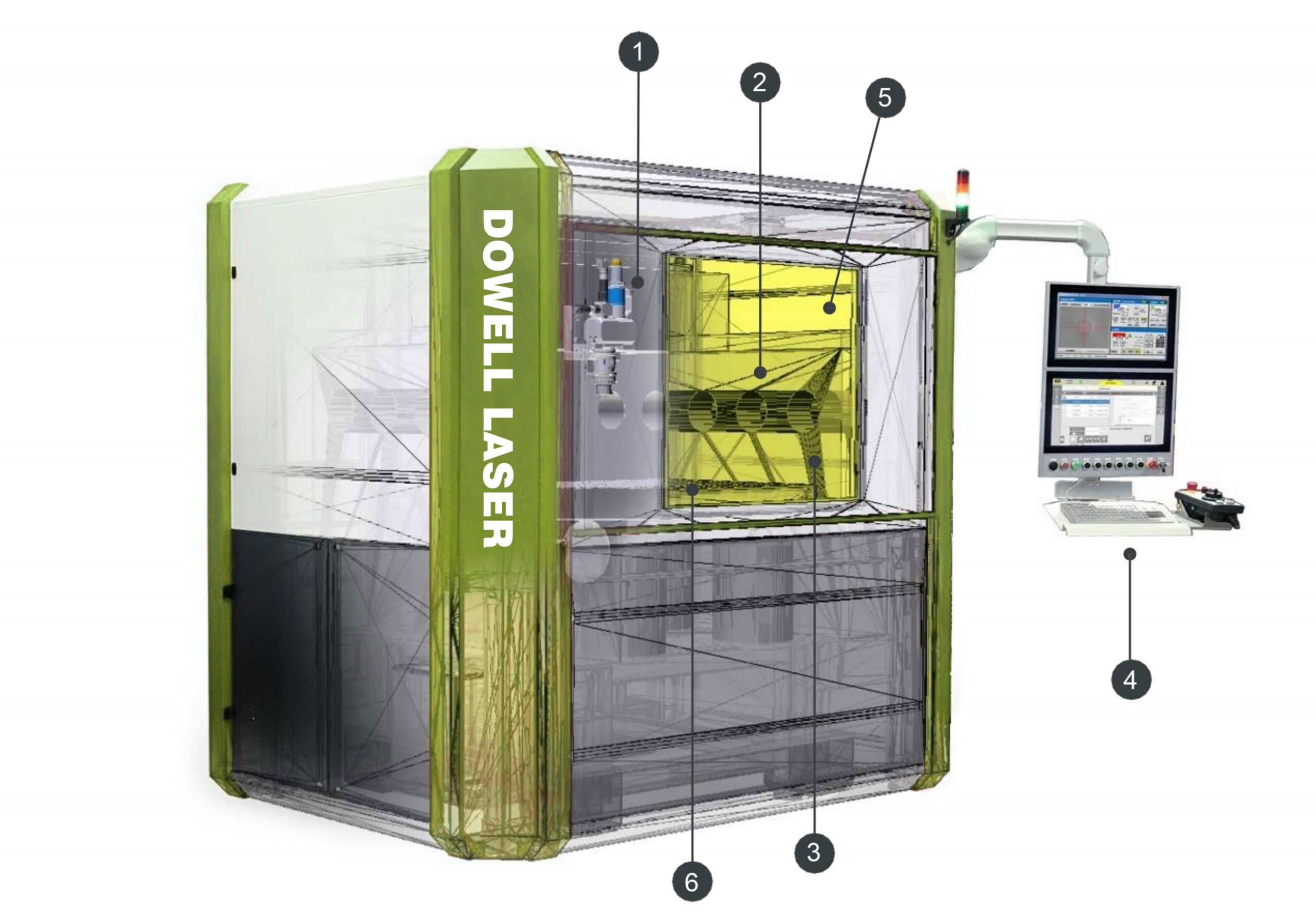
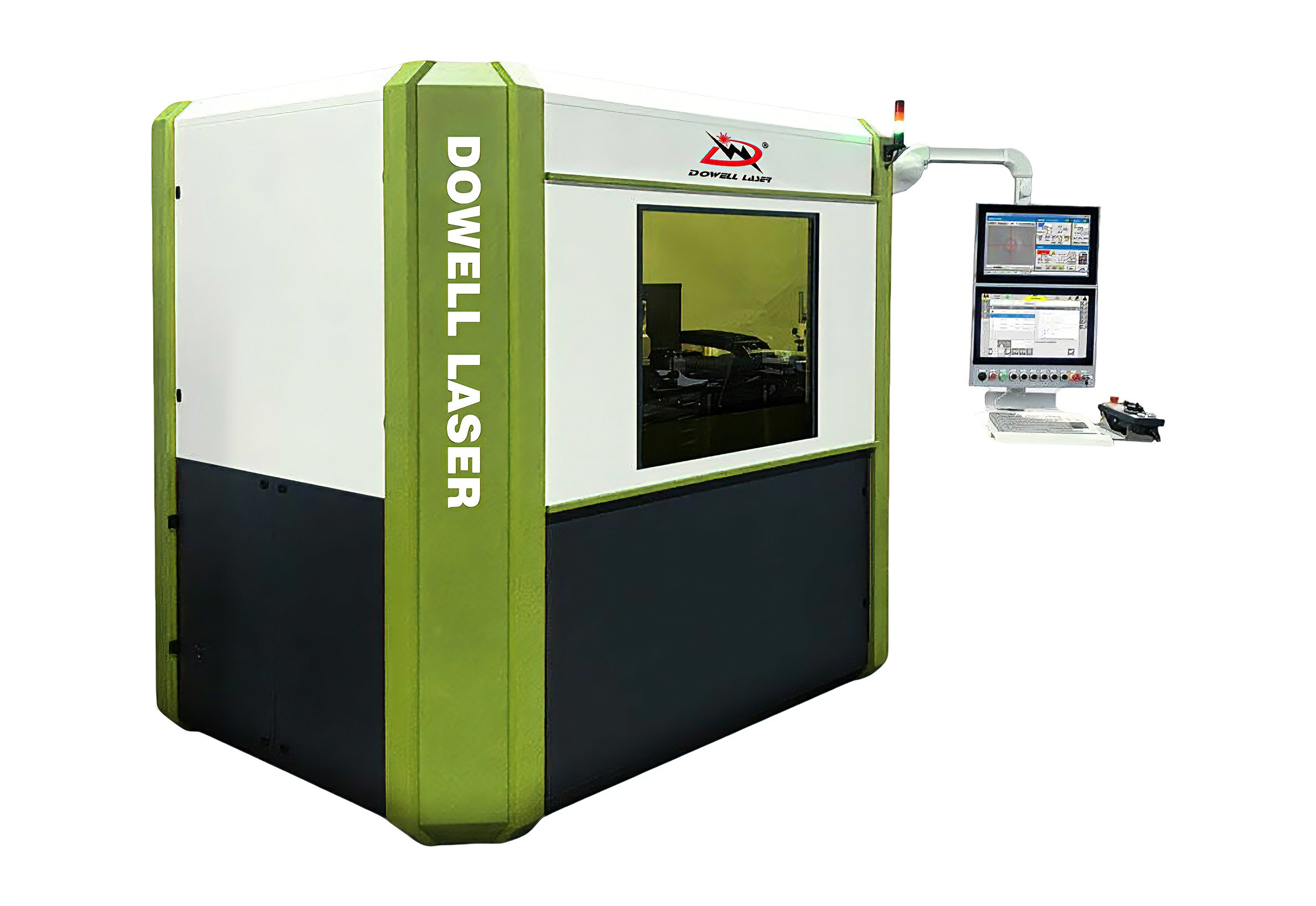
Composition of WG700 Water-guided Laser Processing Center
Upgraded across all dimensions from core components to intelligent systems, it integrates high precision, high efficiency, and ease of operation. It is not only a “powerful tool” for ultra-precision machining, but also a “core competitiveness” for enterprises to seize the high-end manufacturing track!
01.
The LJFK45IR waterjet laser head features a quick-change coupling unit and unique jet protection technology.
02.
High-precision gantry-type 3/4/5 axis linear motion system with an integrated natural stone base.
03.
X-axis travel 600mm, Y-axis travel 600mm, Z-axis travel 300mm, capable of machining large parts.
04.
HMI human-machine interface system equipped with two independent displays, one for machine tool control and the other for waterjet process data control.
05.
Extra-large 900*800mm laser safety observation window, providing a clear view of the laser processing process.
06.
Large worktable with over 1000 M6 threaded holes for flexible workpiece fixation and clamping system.
Technical Specifications of WG700 Laser Microjet Processing Center
Dowell Laser develops, manufactures, and markets laser systems based on its proprietary waterjet laser technology. Dowell Laser systems are designed to deliver powerful performance for demanding applications while maintaining ease of operation, quick maintenance, and cost-effectiveness.
|
Product Image
|
Product Name
|
Item
|
Beschreibung
|
|---|---|---|---|
|
|
Maschine |
Aufbau |
Natural stone base; Gantry-type 3-axis linear motor structure |
|
|
|
Axis Travel |
X: 600mm linear / Y: 600mm linear / Z: 300mm lead screw |
|
|
|
Positioning Accuracy |
+/-2um (<500mm/s) |
|
|
Wiederholbarkeit |
P3S-560 |
+/-0.5um |
|
|
|
Speed and Acceleration |
G0: max. 1500mm/s; G1: max. 1000mm/s; Acceleration: 1G |
|
|
|
: Некоторые |
B&R/Beckhoff |
|
|
|
Dimensions/Weight |
L*W*H = 1600*2000*2250mm / 3500kg |
|
|
Laser Technology |
Machining Technology |
Dowell Laser's proprietary water-guided laser technology, including patented features such as: water and laser coupler, air jet protection, etc. |
|
|
|
Cutting Head |
|
|
|
|
Laser Type |
Green / Red |
|
|
|
Laser Wavelength |
523 - 1080nm |
|
|
|
Leistung |
40 - 10000 W |
|
|
|
Fiber core diameter/beam quality |
50µm/BPP 2.0 typical |
|
|
Water Pump |
Water Pump Type |
High-pressure water pump for water-guided laser processing |
|
|
|
Water Pump Brand |
Dowell Laser AVHPP600 |
|
|
|
Operating Pressure |
50–550 bar, pulse-free water flow |
|
|
|
Water Jet Nozzle Size |
30–80 μm |
|
|
|
Purification Requirements |
Deionized water with three-stage filtration |
|
|
Operating Environment |
Water |
Municipal water (<20°C) or distilled water in a tank; consumption approximately 1 L/hour |
|
|
|
Compressed Air |
6-8 bar, dry, oil-free air; pump consumption approximately 400 Nl/hour; processing consumption approximately 300–900 Nl/hour |
|
|
|
Power Supply |
1 * 380V–415V, +/-10%, 3P–N, 1 * 3 * 400V |
Note: Dowell Laser holds over 20 patents and has patents pending related to its core technologies, including unique patented technologies such as high-power laser coupling methods, air jet protection systems, and easy-to-maintain laser coupling unit designs.
Selection Guide & Comparison Tool
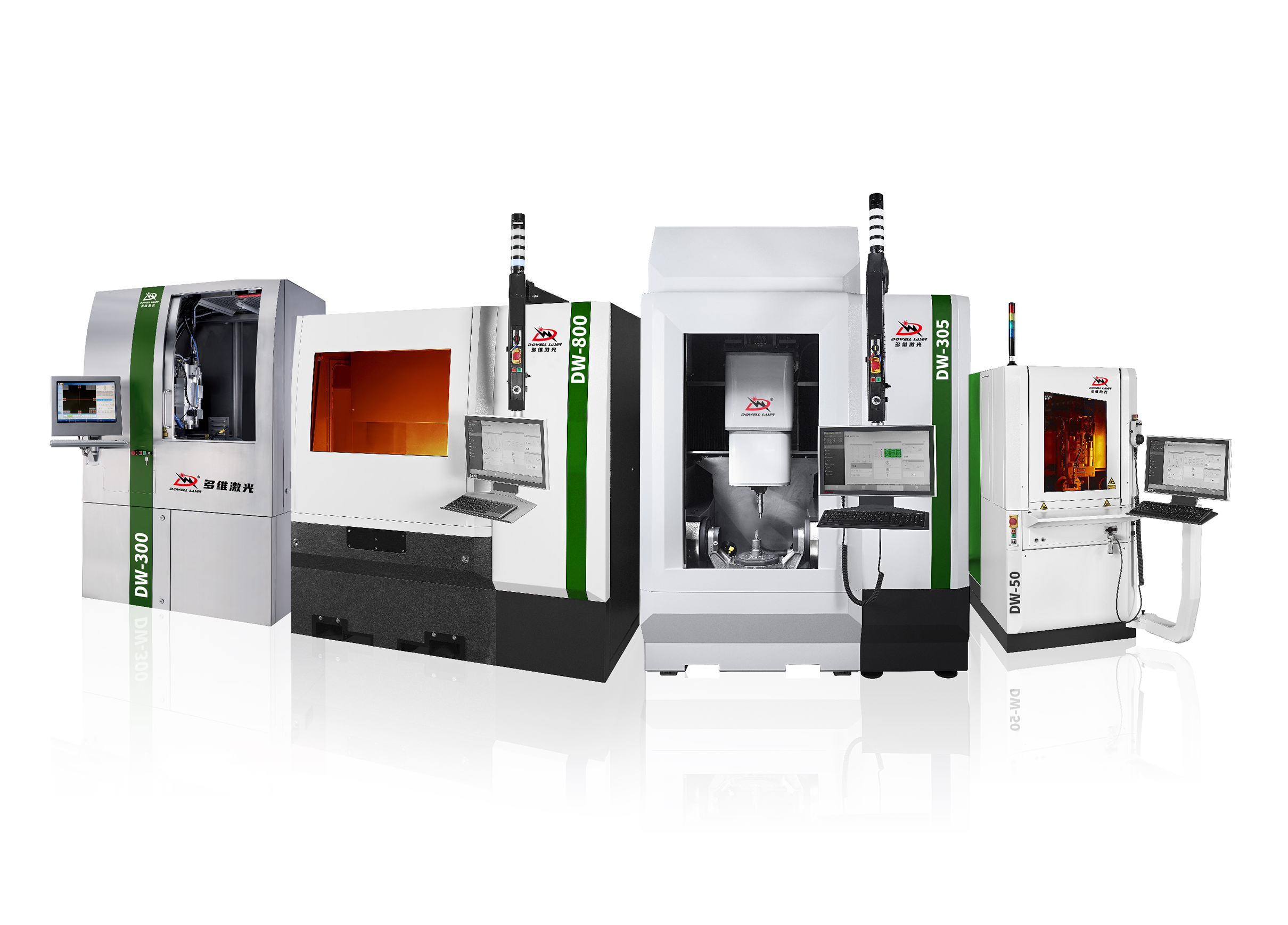
The LCS-50 system is ideal for precision machining of diamond cutting tools, watch components, and other small parts requiring precision cutting, drilling, grooving, slicing, and 3D machining.
The LCS 150 is a general-purpose laser cutting system designed for micromachining applications, such as cutting, drilling, or grooving in various industrial sectors. This system can utilize different laser powers.
The LCS 305 is a laser microjets LMJ® machining system designed for automated production of large-size cutting tools, multi-tooth diamond tools, and other 3D machining applications. Featuring a uniquely designed five-axis linkage, its highly dynamic axial machining enables precision machining with maximum accuracy and speed simultaneously.
Product
Outlooks
Version
LCS 50-3
LCS 50-5
LCS 150
LCS 305
Working Volume (mm) (W x D x H)
50 x 50 x 50
50 x 50 x 50
150 x 150 x 100
500 x 380 x 380
Accuracy (µm)
+/- 3
+/- 3
+/- 5
+/- 5
Repeat Positioning Accuracy (µm)
+/- 1
+/- 1
+/- 2
+/- 2
Number of Axis
3 Axis
5 Axis
3/4/5 Axis
5 Axis
Laser Type
Diode-pumped solid-state neodymium: YAG, Pulsed
Wavelength (nm)
532
532
532/1064
532
Main Unit Dimensions (mm) (W x D x H)
800 x 1200 x 1650
800 x 1200 x 1650
1050 x 800 x 1870
1800 x 1950 x 2610
Control Cabinet Dimensions (mm) (W x D x H)
700 x 2300 x 1600
700 x 2300 x 1600
700 x 2300 x 1600
700 x 2300 x 1600
Mehrachsige wassergeführte Laserbearbeitungsmaschine
grüner Laserliniengenerator
Laserschneidkopf mit Koppelkammer
Marmor-Körpergestell
Hochdruck-Wasserversorgungssystem
Optisches Übertragungsgerät
Metadaten des Hauptblatts
FAQ
Wie hoch ist der Preis einer wassergeführten Laserschneidmaschine?
Der Preis einer wassergeführten Laserschneidmaschine
Wie verbessert Wasser den Laserschneidprozess?
Wasser hilft bei der Kühlung des Materials und der Laseroptik, reduziert Rauch und Schmutz und kann die Schnittpräzision erhöhen, indem es die Wärmeverzerrung minimiert und die Gesamtschnittqualität verbessert.
Gibt es Wartungsanforderungen für eine wassergeführte Laserschneidmaschine?
Ja, Zur regelmäßigen Wartung gehört das Prüfen und Ersetzen des Wassers, das Reinigen der Optik, das Sicherstellen der ordnungsgemäßen Funktion des Kühlsystems und die Überprüfung auf eventuellen Verschleiß der Komponenten.
Welche Leistungsstufen sind für wassergeführte Laserschneidmaschinen verfügbar?
Die Leistungsstufen variieren stark und liegen je nach Maschinenkonstruktion und zu schneidendem Material normalerweise zwischen einigen Hundert Watt und mehreren Kilowatt.