Looking for an Expert Doctor?
Gastroenterology
Cardiology
Neurology
Heart Surgery
Dentist
Medicine
Instant appointment With Doctors
-
24/7 Service Facilities
-
Quality Doctor’s
-
World Class Environment
International Research Progress of Water-Guided Laser Technology
As one of the most outstanding technological innovations of the 20th century, laser technology has undoubtedly had a profound impact on the modernization process. What deserves our attention in particular is the extremely special water-guided laser technology. This technological breakthrough has brought great help to the expansion of materials processing, inspection and measurement, national defense and military and life science fields. Today, let me lead you to understand the current research status of water-guided laser technology overseas.
Looking back at history, water-conducting lasers have emerged as early as the Renaissance of the last century. It was not until 1886 that it really attracted academic attention. Professor Colladon described the application scenario of water-conducting lasers in detail for the first time in his research report. However, the actual application of water-conducting lasers still remained in the theoretical exploration stage.
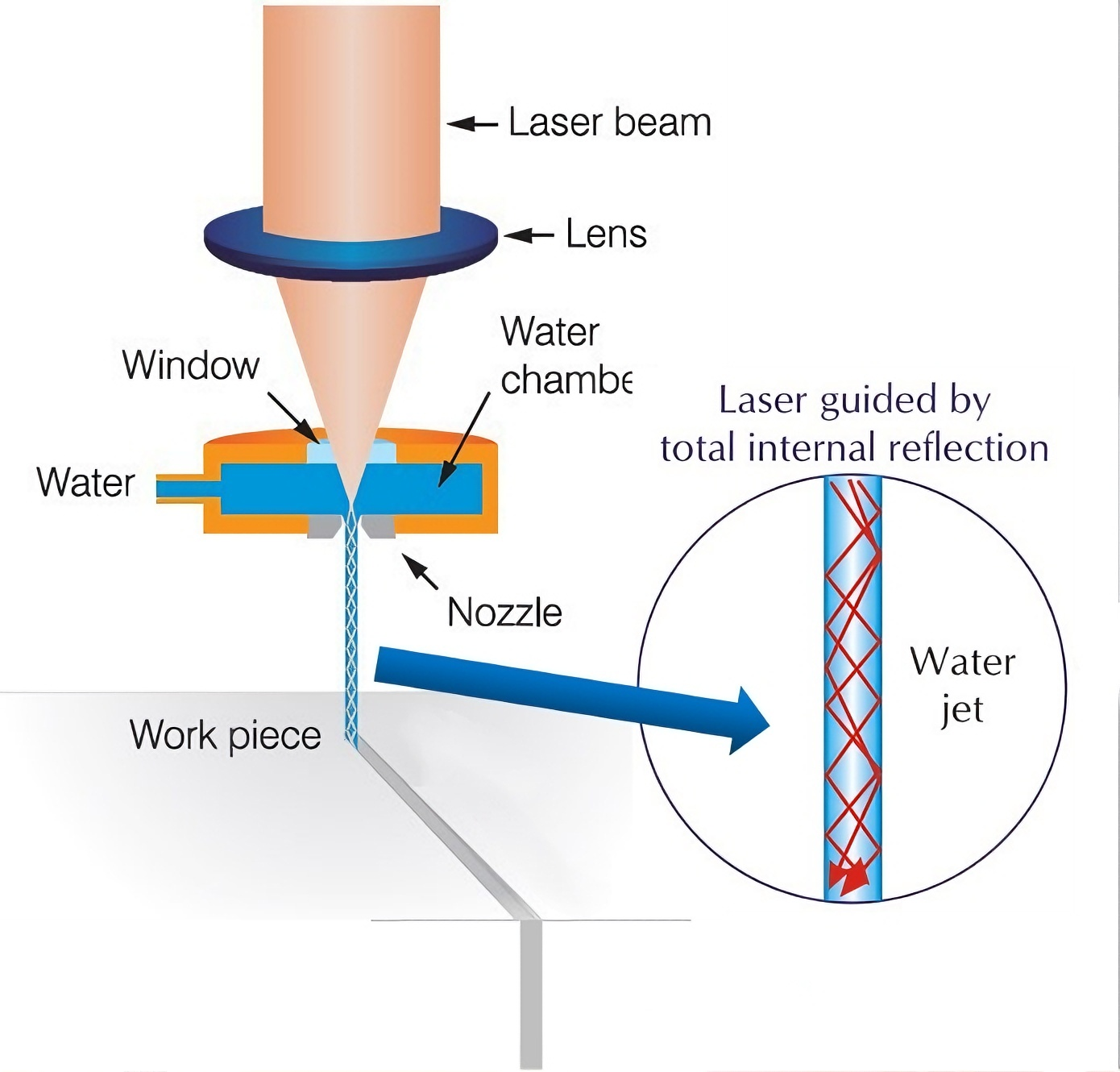
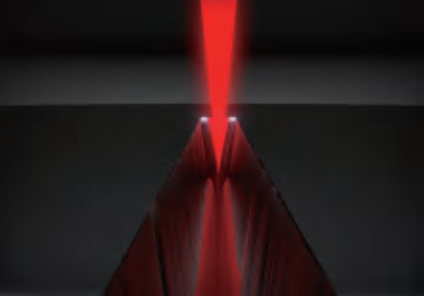
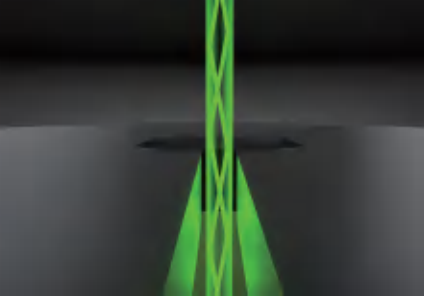
It was not until 1993 that a Swiss scientific research team successfully applied it to the processing of specific materials. They cleverly used high-pressure flowing water to guide the focused laser beam, so that the laser can achieve total reflection in the water, thus confining its energy inside the water beam, thereby achieving precise manipulation of the surface of the object to be processed. In this process, the water beam not only assumes the task of guiding the laser, but also plays the role of coolant.
In 2002, Tomokazu et al. conducted in-depth research on femtosecond laser micro-nano three-dimensional processing technology and successfully produced three-dimensional microstructures with a spatial resolution of up to 100 nanometers. Although the results of this research are excellent, the requirements on the materials to be processed are extremely high, resulting in a scarcity of available materials.
In order to solve this problem, the SYNOVA company in Lausanne, Switzerland, came into being. This company is committed to developing water-guided laser-related equipment and has successfully applied it to the processing of a variety of precision materials. It is worth mentioning that Dr. Bernold successfully obtained a U.S. patent for water-guided laser processing equipment in 1997, which marked the foundation for the development of water-guided laser processing.
Since then, researchers from various countries have realized the broad uses and prospects of water-guided lasers, and have invested in deeper research. Among them, the stability of water jets, micromachining of water-guided lasers, and the interaction between lasers and water flow have become the focus of research.
In 2004, Dr. Akos Spiegel conducted in-depth research on the phenomenon of nonlinear stimulated Raman scattering after laser light is coupled into a water beam. He found that when the distance between the laser source and the processed material increases, the nonlinear stimulated Raman scattering effect produced by the higher-power laser becomes weaker, and the corresponding changes in the water beam fiber become more significant. This research result provides an important basis for selecting appropriate working distance and laser power in the future, and also lays a solid foundation for in-depth discussion of the relationship between laser and water jet.
In the same year, Dr. Philippe Conuty also conducted research on the relationship between lasers and water jets. He revealed the rules of laser transmission in fine water jets and clearly pointed out that the transmission characteristics of laser in water beams and the transmission characteristics in optical fibers have many commonalities, both involving the uniform and symmetrical distribution of laser energy. In addition, he also emphasized the close connection between laser energy distribution and aperture size, which provided an important reference for nozzle aperture setting.
Overseas research on water-guided lasers started early and developed rapidly. The research content mainly focuses on improving the parameters and performance of the water-guided laser itself, aiming to further improve the technical level of the water-guided laser so that it can be applied in a wider range of high-end technology fields.
With the continuous advancement of science and technology, I believe that water-guided laser will show its unique charm in more fields. Let us look forward to it continuing to contribute to the prosperity and development of human society in the days to come!
Demo
Created with the AI Image Generator

Use This Prompt
Experience the art of Image Remix, where creativity knows no bounds

Use This Prompt
Transforming text into vibrant visual appearance.

Use This Prompt
Reconstruct missing or damaged parts of an image seamlessly & make it more appealing

Use This Prompt
Remove Background
Remove your image background & pick yours. Background remove with ease

Use This Prompt
Get multiple images & choose what you like the most to use.

Use This Prompt
Generate high-quality images that make your site more lively.

Use This Prompt
Get multiple images & choose what you like the most to use.

Use This Prompt
Get multiple images & choose what you like the most to use.

Use This Prompt
Get multiple images & choose what you like the most to use.
Parámetros técnicos
- Marca: Dowell Laser
- Tipo de láser: DPSS Nd: YAG, pulsado
- Potencia media: 50, 100, 200, 400w
- Longitud de onda: 532 nm
- Transmisión de fibra óptica: diámetro del núcleo de 100um-200um
- Eje lineal XY: motor lineal
- Control CNC (Bosch-Rexroth): 2.3.4.5 ejes
- Aceleración (X, Y): 1G
- Velocidad máxima XY: 1000 mm/s
- Diámetro de la boquilla del chorro de agua: estado sólido bombeado por diodos Nd: YAG, pulsado
- Tipo de bomba: Bomba transmisora de presión neumática
- Peso (armario del equipo): 700-750 kg
- Flujo de agua de refrigeración del láser l/min: máximo 8-32 (dependiendo de la potencia del láser)
Ventajas del corte por láser de agua
El uso de un rayo láser cilíndrico durante el proceso de corte reduce el desperdicio de material, tiene una ranura estrecha y no tiene conicidad en las paredes laterales, lo que mejora la eficiencia y la rentabilidad.
Debido a que se utiliza enfriamiento por chorro de agua, no hay impacto térmico durante el procesamiento, lo que elimina el riesgo de cambiar las propiedades del material durante el procesamiento.
Las herramientas de ultraprecisión, sin grietas durante el procesamiento, garantizan que su producto final cumpla con los más altos estándares de calidad.
Nuestra tecnología de procesamiento sin contacto garantiza bajos costos operativos.
Nuestra tecnología puede perforar agujeros con relaciones de aspecto de hasta 1:20 (diámetro a profundidad) sin conicidad en las paredes laterales.
Se pueden procesar óxidos como alúmina y circonio o no óxidos como SiC, B4C, CBN, AlN, SiN y GaN, así como compuestos (CMC) para diversas aplicaciones.
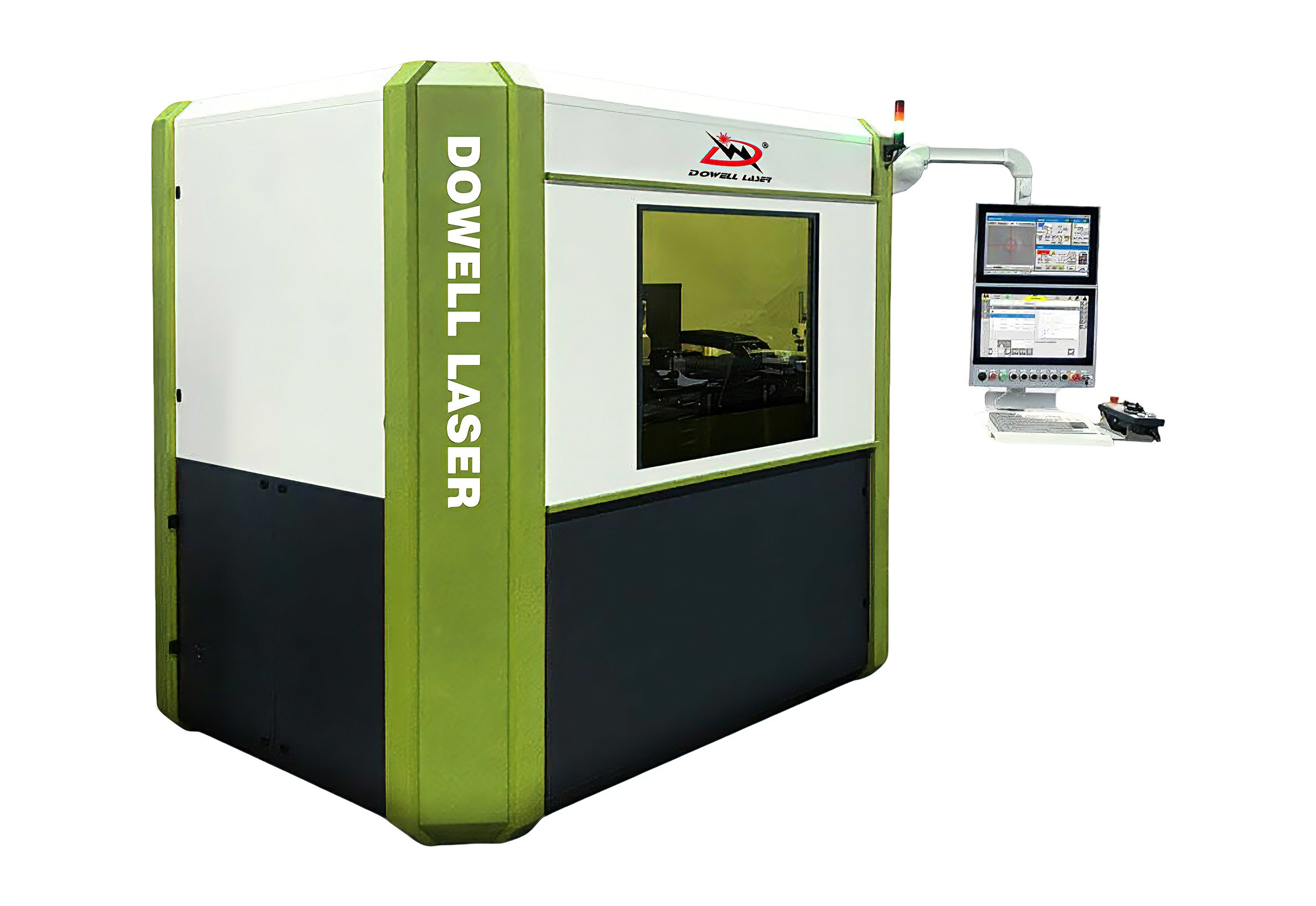
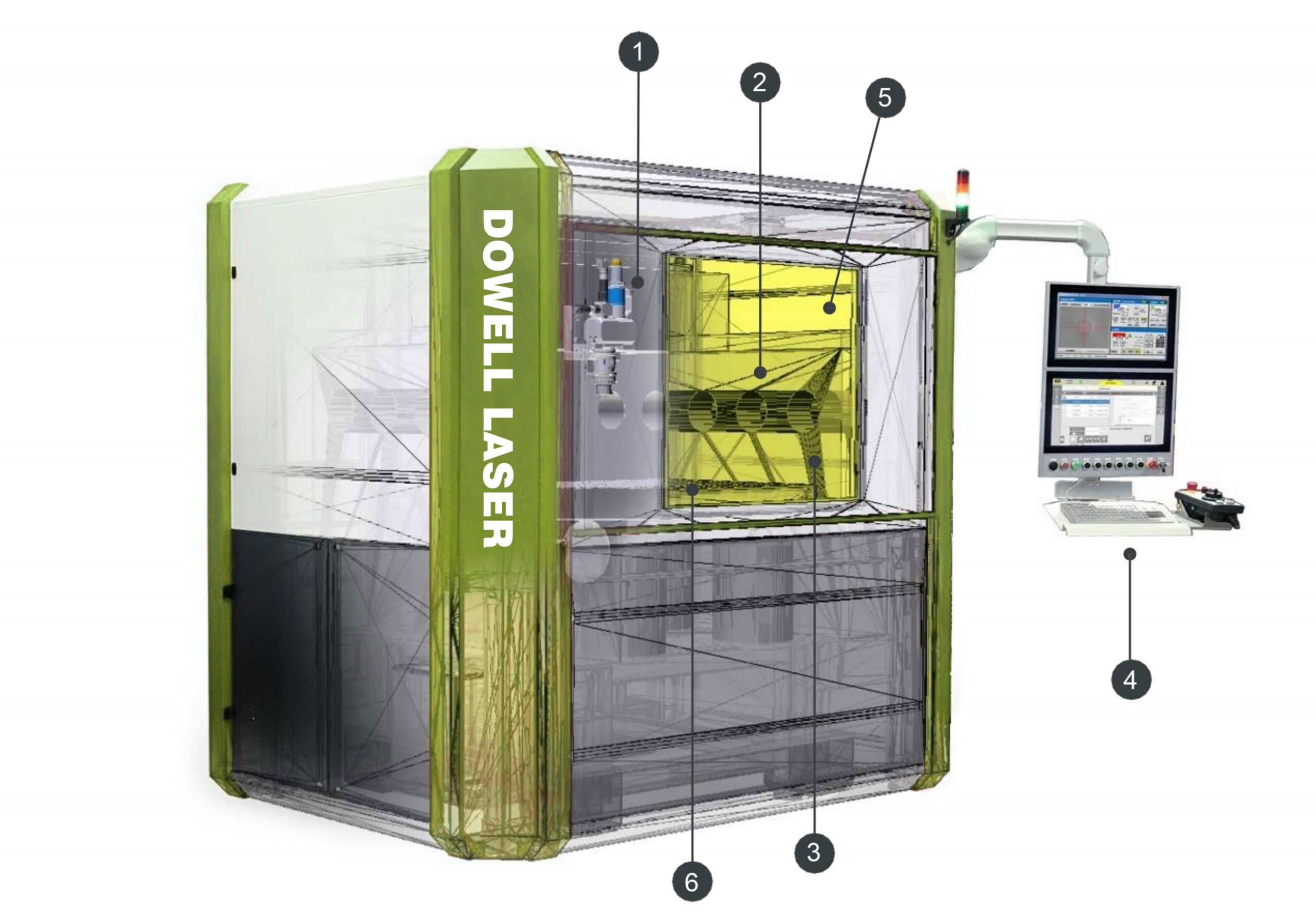
Máquina herramienta con centro de mecanizado láser guiado por agua de varios ejes
generador de línea láser verde
Cabezal de corte láser con cámara de acoplamiento.
Estante para carrocería de mármol
Sistema de suministro de agua a alta presión.
Dispositivo de transmisión óptica
Meta de la hoja del cuerpo
Características del corte por láser guiado por agua
Superficie lisa: La superficie de corte es lisa y básicamente no tiene deformación ni daño térmico;
Rápido y preciso: La alta precisión de procesamiento y el ancho de incisión pequeño pueden completar el corte de PCD de 1,6 mm y carburo cementado a una velocidad de 3 mm/min;
Operación sencilla: Gran distancia de trabajo, sin necesidad de concentrarse
Incisión recta: Sin conicidad, incisión afilada y completamente paralela.
productos de corte
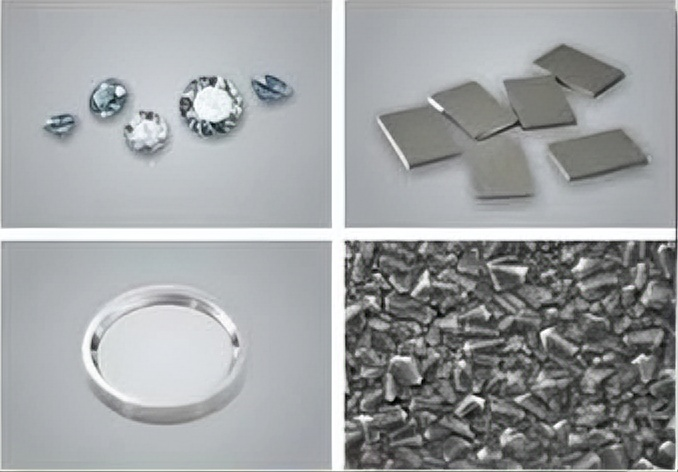
El láser guiado por chorro de agua puede satisfacer necesidades de procesamiento complejas y precisas y puede usarse para corte y perforación de alta precisión de metales, metales líquidos, materiales semiconductores, cerámica, carburo de silicio, diamante, recubrimientos de barrera térmica, carburo cementado, aleación Kovar y fibra de carbono. materiales compuestos, etc
solicitud
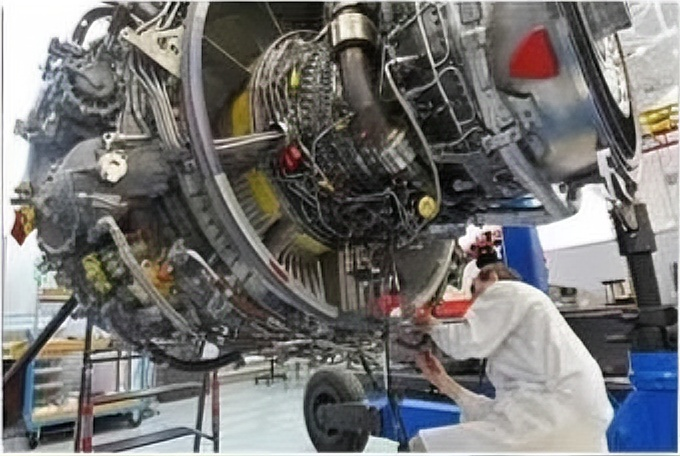
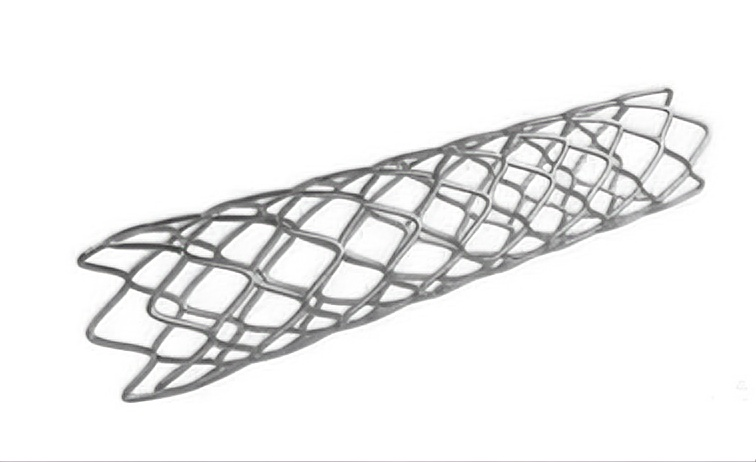
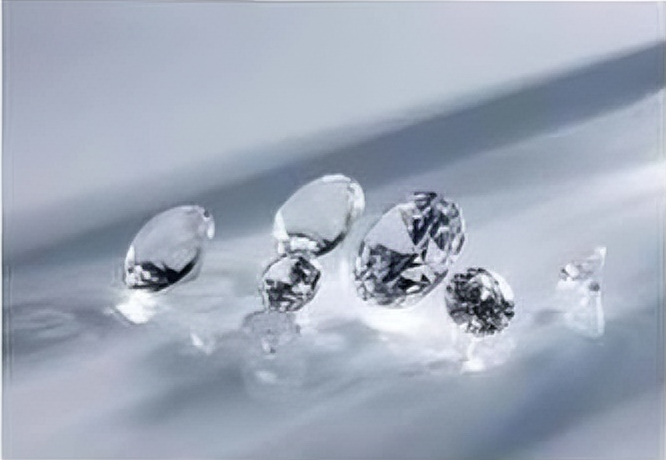
La tecnología láser guiada por chorro de agua se utiliza en el procesamiento de microestructuras de materiales de aviación, procesamiento de stents cardíacos, corte en cubitos de cerámica y semiconductores y corte de piedras preciosas; involucra nuevas energías, redes inteligentes, aeroespacial, semiconductores, fabricación electrónica, nuevos materiales, automóviles y otros campos.
máquina de corte por láser guiada por agua personalizada
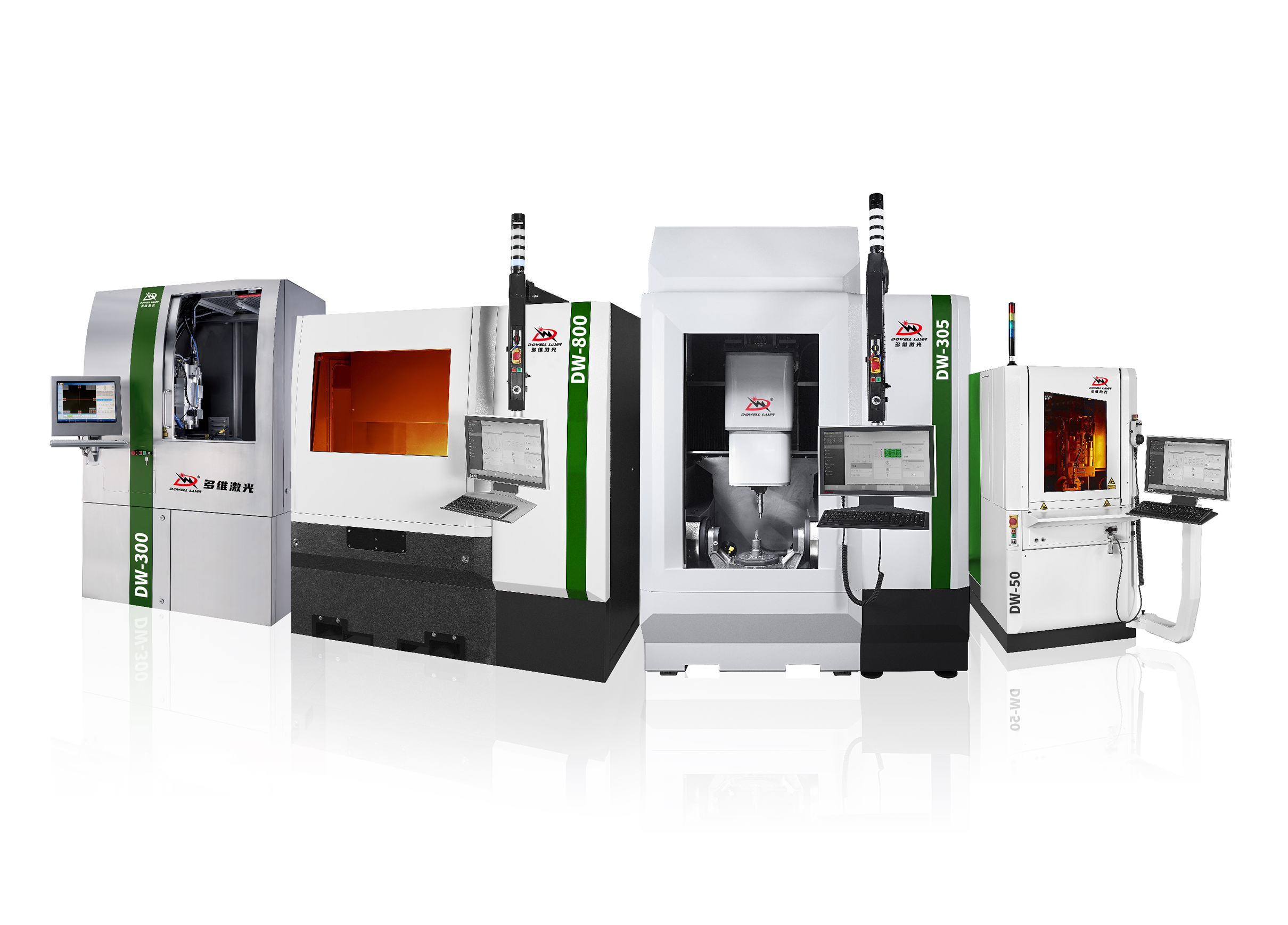
Tengo 15 años de experiencia en la fabricación de equipos láser en Dowell Laser Factory. La última máquina de corte por láser guiada por chorro de agua, desarrollada por nuestra empresa, ha cambiado por completo el método tradicional de procesamiento por láser a una combinación perfecta con la combinación perfecta de disparo de agua y tecnología láser, que se utiliza ampliamente en la industria de procesamiento de precisión. Este método innovador no tiene paralelo en precisión y rendimiento multifuncional, es mejor que las tecnologías tradicionales y proporciona una mayor eficiencia de procesamiento y excelentes efectos de procesamiento.
Si tiene un modelo especial personalizado, puede comprender que debemos consultarnos y obtener el último precio del láser guiado por agua.
Preguntas más frecuentes
¿Cuánto cuesta la máquina de corte por láser guiada por agua?
El precio de una máquina de corte por láser guiada por agua.
¿Cómo mejora el agua el proceso de corte por láser?
El agua ayuda a enfriar el material y la óptica del láser, reduce el humo y los residuos y puede aumentar la precisión del corte al minimizar la distorsión por calor y mejorar la calidad general del corte.
¿Existe algún requisito de mantenimiento para una máquina de corte por láser guiada por agua?
Sí, El mantenimiento regular incluye verificar y reemplazar el agua, limpiar la óptica, garantizar que el sistema de enfriamiento funcione correctamente e inspeccionar el desgaste de los componentes.
¿Qué niveles de potencia están disponibles para las máquinas de corte por láser guiadas por agua?
Los niveles de potencia varían ampliamente, normalmente desde unos pocos cientos de vatios hasta varios kilovatios, según el diseño de la máquina y el material que se corta.